There is a particular kind of silence that falls over a child who is reading a book about loss. Their face becomes very still. They turn the pages slowly. Sometimes they read the same page twice. And then, often, they come to find you — not with words about the book, exactly, but with a closeness, a need for contact, a willingness to talk about something that has been sitting at the edge of their thoughts for days. The book opened a door that they did not quite know how to find on their own.
This is not a coincidence. It is not even a mystery. It is a predictable consequence of how narrative works on the human mind, and particularly on the developing mind of a child. Stories are not merely entertainment. They are, in the oldest and most fundamental sense, tools for emotional understanding — and for children, who lack the vocabulary, the life experience, and the neurological development to process intense feelings directly, they are often the most effective tools available.
Why Emotions Are Hard for Children
To understand why stories help, it is worth beginning with why emotions are so difficult for young children to manage. The prefrontal cortex — the region of the brain responsible for emotional regulation, impulse control, and the ability to think clearly under stress — is not fully developed until the mid-twenties. In a young child, it is barely online. This is not a character flaw. It is neurological reality. When a five-year-old is overwhelmed by anger or fear or grief, they are genuinely incapable of the kind of rational self-management that adults take for granted.
What children do have is an extraordinary capacity for imaginative engagement. They live closer to the emotional surface than adults. They are more easily moved, more deeply affected by story and symbol and image. This imaginative permeability, which can seem like a vulnerability, is also a resource. It means that stories can reach children at a depth that direct conversation often cannot.
The Language of Metaphor
One of the ways stories help children process emotions is by giving them a metaphorical language for experiences they cannot yet name. A child who is anxious about starting a new school may not have the words "anxiety," "transition," or "belonging" in their vocabulary. But they can follow a small rabbit who is nervous about going to the meadow alone for the first time. They can feel the rabbit's hesitation, understand the rabbit's fear, and experience — through the story — the discovery that the meadow is survivable, even wonderful.
The metaphor does double work. It makes the emotion approachable because it is wrapped in a character who is not the child. And it provides a narrative arc — a progression from fear through experience to resolution — that models, at an emotional level, the possibility of moving through difficult feelings rather than being stuck in them. The child who has followed enough of these story-arcs begins, gradually, to believe in their own capacity to move through difficulty.
Grief, Loss, and the Story That Makes Space
Of all the emotions that children struggle to process, grief is perhaps the most difficult. Children experience loss in forms that adults sometimes underestimate: the death of a grandparent, a move to a new city that leaves friends behind, the end of a beloved family pet, the dissolution of a friendship. These losses are real and significant, and they occur before children have developed any of the conceptual frameworks that adults use to understand death and loss.
Books that deal honestly with grief — that do not rush to resolution, that do not tell the child to be brave or to cheer up, but that simply stay present with the sadness and let it breathe on the page — perform a function that is almost impossible to replicate through direct conversation. They normalize the grief. They say, in the gentlest possible way: this is a real thing, it hurts the way you feel it hurts, and you are not alone in feeling it. For a child who has been told, in various ways, to move on or to feel better, the simple experience of a book that takes their grief seriously can be quietly transformative.
Bibliotherapy: The Formal Science of Healing Stories
The use of books to support emotional health is old enough to have a name: bibliotherapy. It was formally developed as a therapeutic practice in the early twentieth century, but its roots go back much further — to the ancient library at Alexandria, which reportedly bore an inscription identifying it as a "healing place for the soul." Today, bibliotherapy is practiced by child psychologists, school counselors, and therapists around the world. The mechanism is well understood: exposure to a character who shares the reader's emotional experience produces identification, which produces catharsis, which creates the emotional space for reflection and integration.
For parents, the formal apparatus of bibliotherapy is less important than the underlying principle. When you see that your child is struggling with something — anxiety about a medical procedure, anger at a new sibling, sadness about a loss — the question worth asking is not only "how do I talk to my child about this?" but also "is there a story that could help?" The story does not replace the conversation. It often makes the conversation possible.
Stories and the Development of Emotional Vocabulary
Children cannot manage emotions they cannot name. One of the most lasting gifts that story reading gives a child is an expanded emotional vocabulary — a richer, more precise set of words for the internal states they experience. A child who knows only "sad" and "mad" and "happy" is working with a blunt emotional instrument. A child who has encountered, through stories, words like "ashamed," "anxious," "wistful," "indignant," "bewildered," and "relieved" has a much finer set of tools for understanding what they feel — and for communicating it to others.
This vocabulary is not learned through lists or flash cards. It is absorbed through narrative, through watching characters experience named emotions in contexts rich enough to give the words their full meaning. When a child hears that a character feels "betrayed" — and understands from the story exactly what has happened to create that feeling — the word becomes a container for a complex emotional experience. The next time the child feels that particular combination of hurt and anger and disappointment, they have a word for it. And having a word for it makes it slightly more manageable.
Reading Together as Emotional Attunement
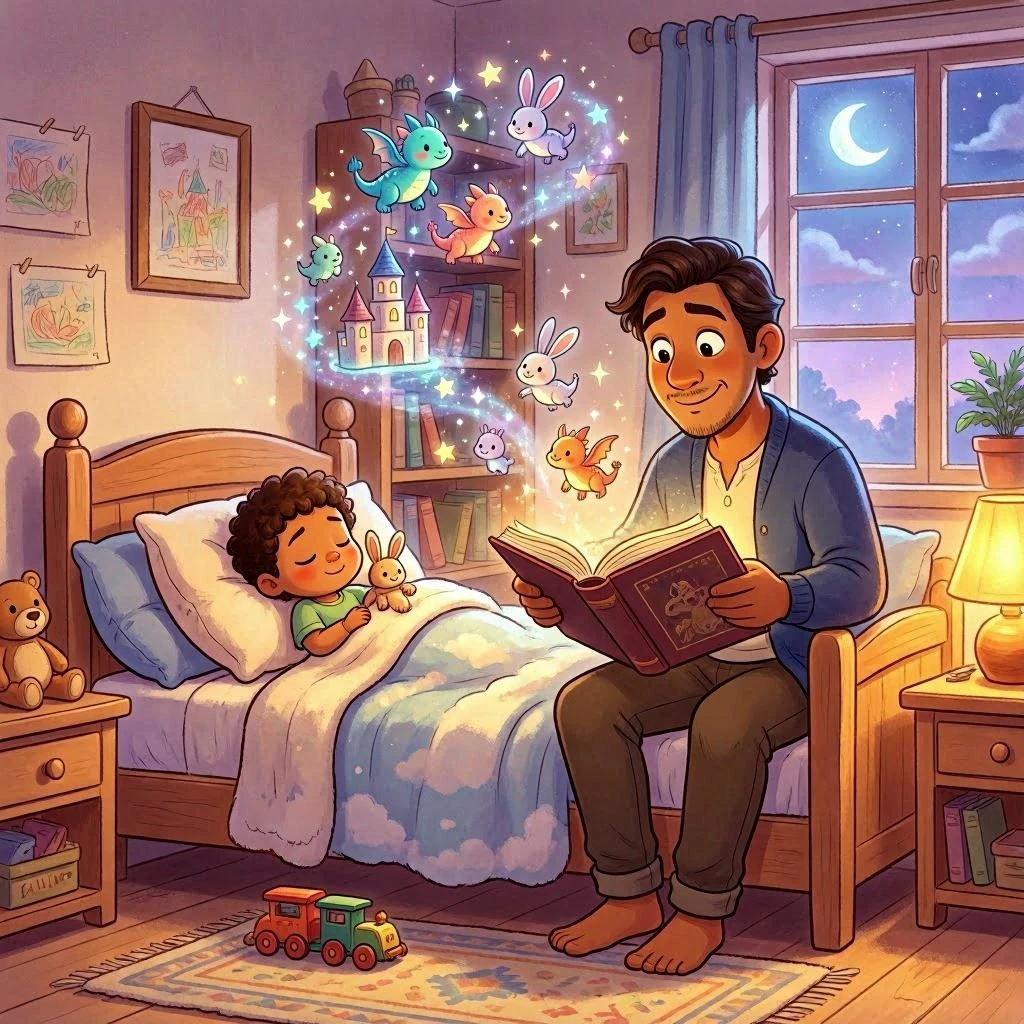
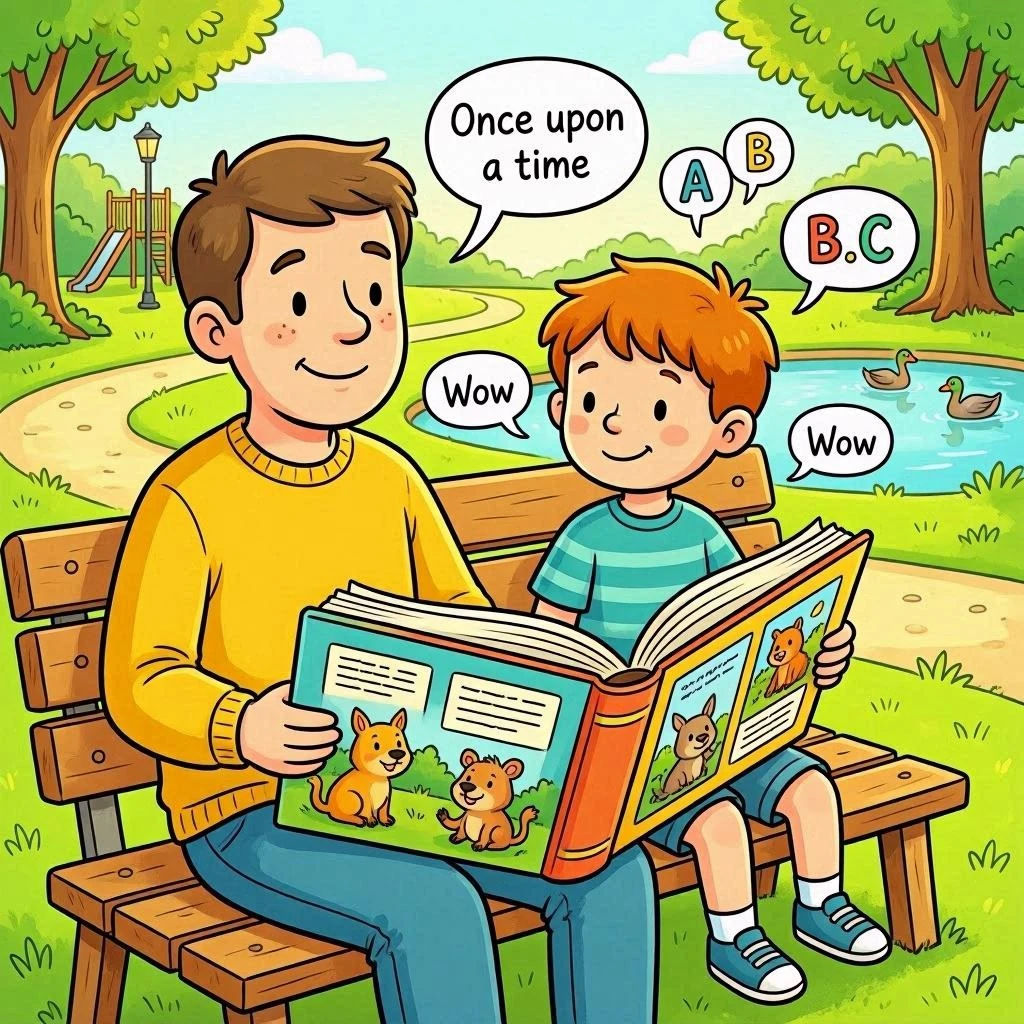
There is a dimension of story-sharing that goes beyond the content of any individual book, and it is one of the most important things to understand about reading and emotional development. When a parent and child read together — especially when the parent reads expressively, responds to the story with genuine feeling, and invites the child to share their reactions — they are engaged in what attachment researchers call attunement. The parent is demonstrating, moment by moment, that feelings are shareable, that emotions are not dangerous, and that the people who love you will not be frightened or overwhelmed by what you feel.
A child who experiences this kind of attunement regularly becomes a child who finds it easier to bring their difficult feelings into the open. The book provides the initial safety of fictional distance. The shared reading relationship provides the deeper safety of secure attachment. Together, they create the conditions in which a child can begin to learn the most important emotional skill of all: the willingness to feel what they feel, to name it, and to trust that they will not be alone in it.
Stories, in the end, are not escapes from emotion. They are expeditions into it — guided, safe, repeatable expeditions that help children become, over time, more skilled and more courageous travelers in the landscape of their own inner lives.