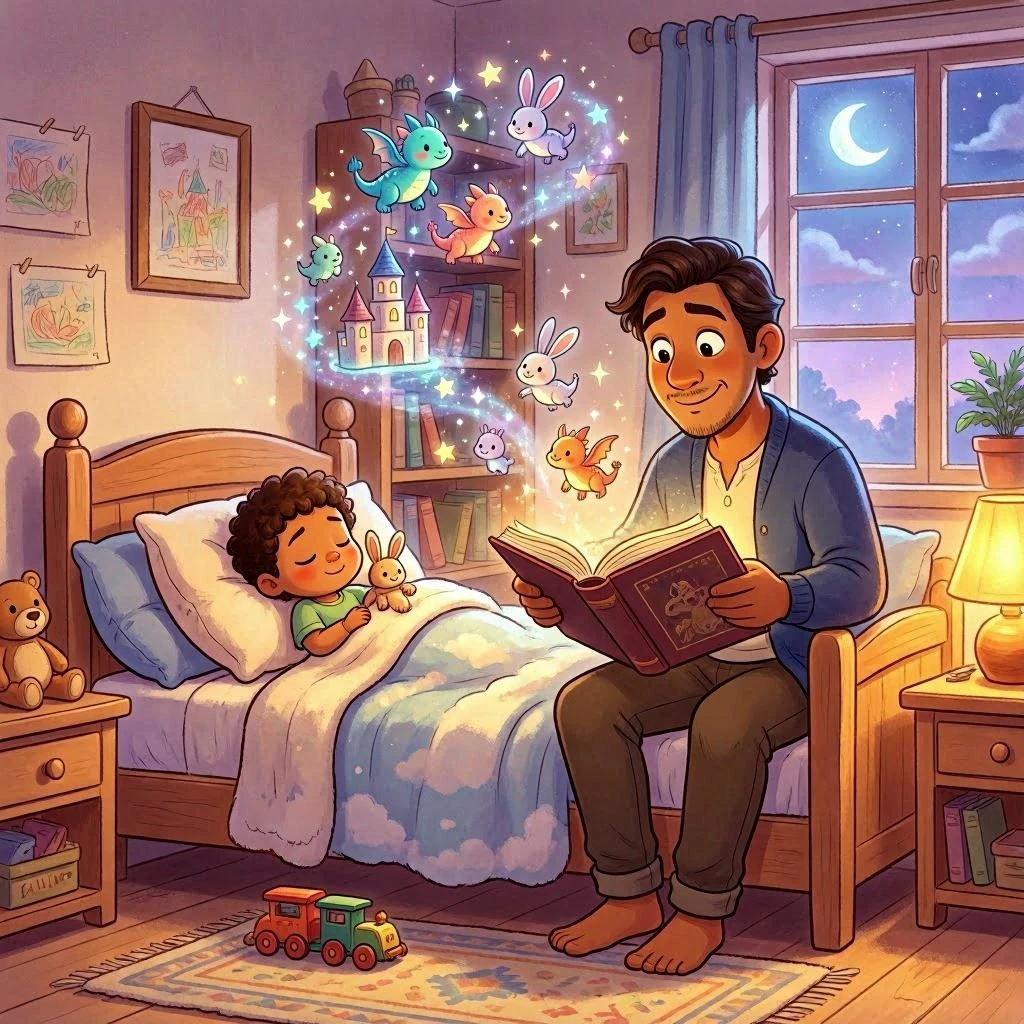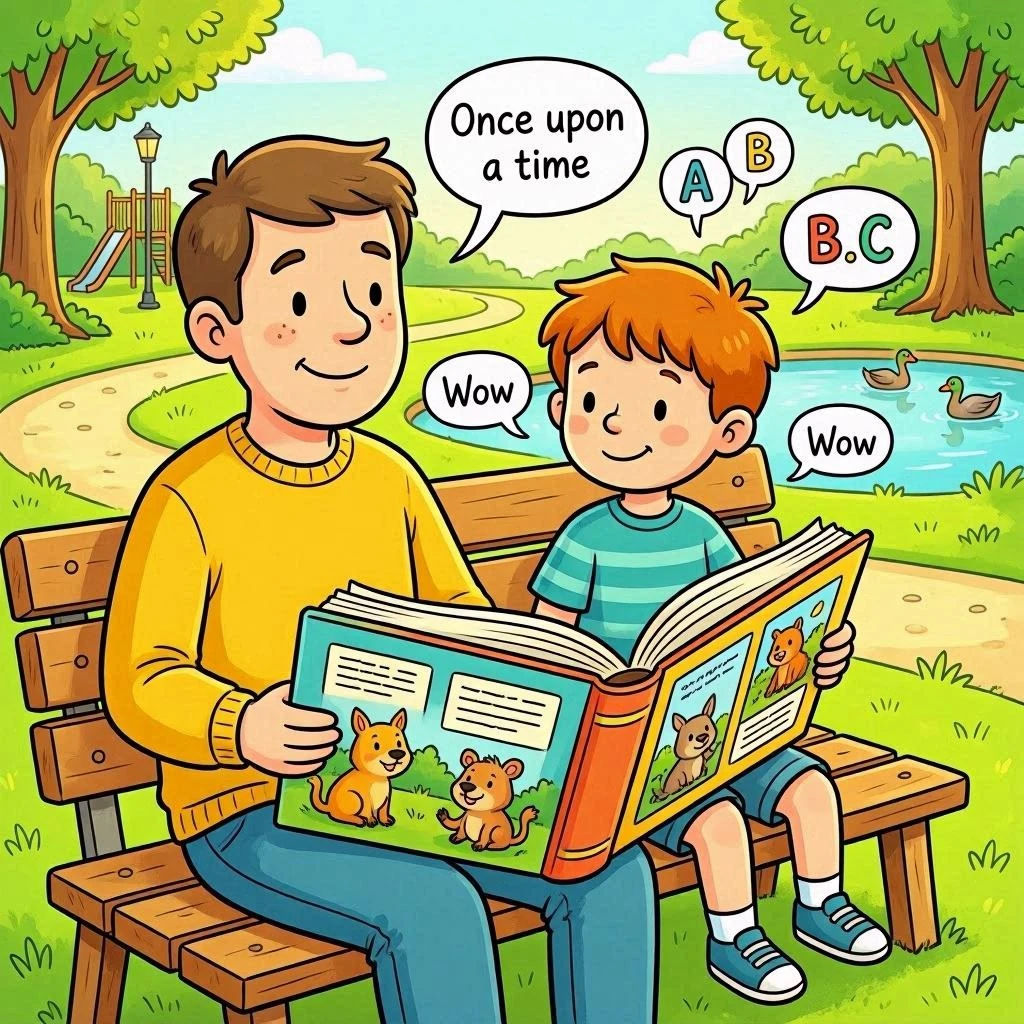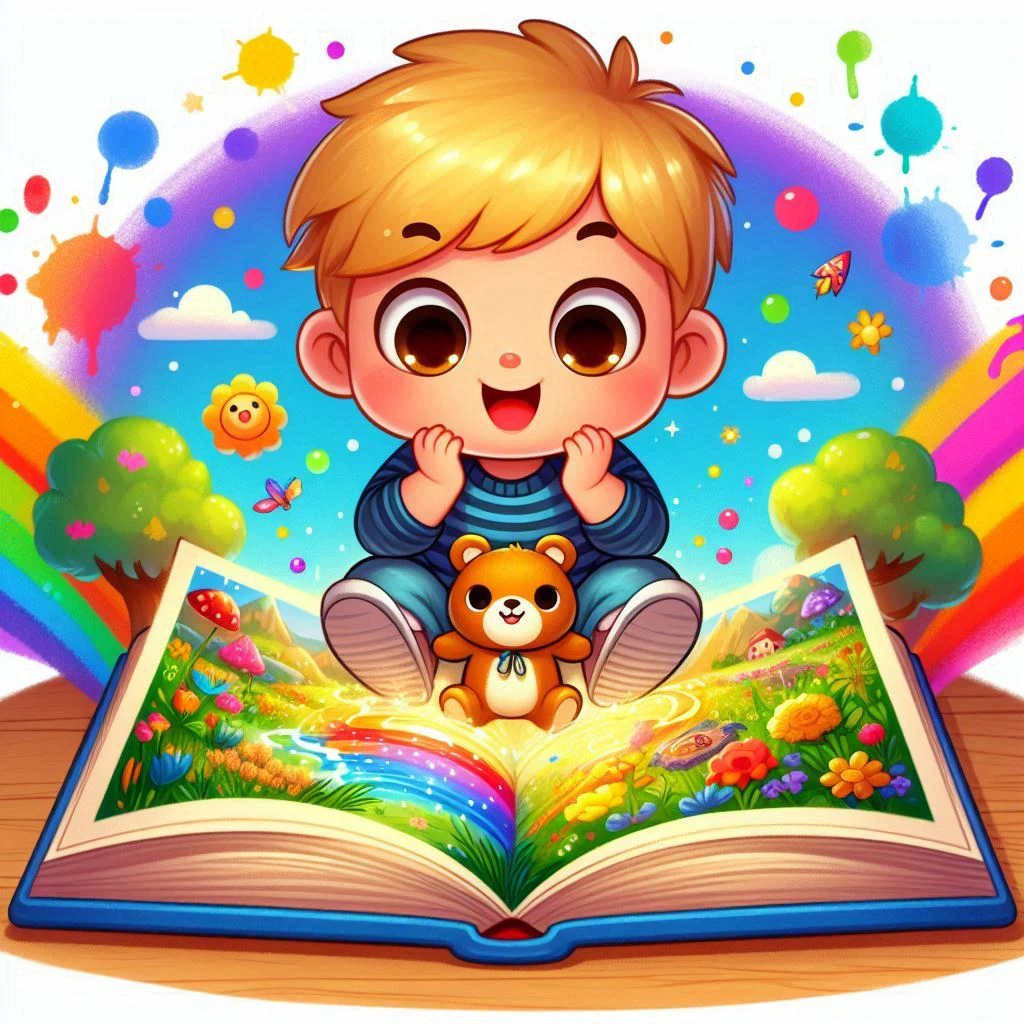
When adults look at a picture book, they tend to look first at the text. They read the words, glance at the accompanying illustration to confirm what the words just said, and turn the page. Children, however, read picture books entirely differently. They read the pictures.
For a young child, the illustration is not a decoration. It is the primary text. The words, read aloud by a parent, provide the soundtrack, but the visual information is where the deep cognitive work is happening. Understanding this dynamic completely changes how we value and share picture books with children.
Visual Literacy in a Visual World
We often talk about the importance of literacy, by which we almost always mean text literacy — the ability to decode letters into words and words into meaning. But we live in a world that is profoundly and increasingly visual. From navigating interfaces to interpreting media, the ability to "read" an image — to understand its tone, its emphasis, what it includes and what it leaves out — is a critical modern skill.
Picture books are a child's first formal training in visual literacy. When a child looks at a spread in a well-crafted picture book, they are learning to decode visual grammar. They learn that a character drawn small in the corner of a large white page feels lonely or insignificant. They learn that dark colors signal danger or sadness, while warm, bright colors signal safety. They learn to follow the direction of a character's gaze to anticipate what will happen next.
This is not passive looking. It is active, analytical decoding. A child who spends years analyzing the sophisticated artwork found in the best modern picture books is building a visual vocabulary that will serve them long after they transition to chapter books.
The Counterpoint of Word and Image
The most brilliant picture books do not simply use illustrations to mirror the text. They use illustrations to expand, contradict, or complicate the text.
Imagine a page where the text reads, "The boy was perfectly happy to be left alone." But the illustration shows the boy sitting in a grey room, looking longingly out the window at other children playing in the sun. The text says one thing; the picture says another.
When a child encounters this kind of counterpoint, they are forced to synthesize two conflicting streams of information. They have to understand irony. They have to realize that the narrator might be unreliable, or that the character is hiding their true feelings. This is an incredibly sophisticated cognitive leap, and picture books introduce it in a way that is accessible and intuitive. It teaches children that truth is often found in the space between what is said and what is shown.
Slowing Down the Reading Experience
In an era of rapid-fire digital entertainment, picture books demand a different pace. You cannot "skim" a complex illustration.
When you read a picture book with a child, the natural rhythm is to read the words, and then pause. The child needs that pause. They need time to scan the image, to find the hidden details, to notice the small mouse in the corner that the text never mentions, to observe the changing weather outside the illustrated window.
This practice of slowing down, of sustained visual attention, is an antidote to the fractured attention promoted by screens. It trains the brain to linger, to observe deeply, and to find satisfaction in quiet discovery.
Building Empathy Through Faces
Before children can fully articulate complex emotions, they learn to recognize them in others. Illustrations in picture books provide a safe, static laboratory for studying human (or animal) expression.
A child can stare at the illustrated face of a sad bear for as long as they need to, analyzing the downturned mouth, the slumped shoulders, the lowered eyebrows. They can study the visual markers of anger, surprise, jealousy, and joy without the pressure of a real-time social interaction. This prolonged visual study of emotional expression directly contributes to the development of empathy. The child learns to read the physical signs of internal states, a skill they then apply to the real people in their lives.
Art Galleries in the Lap
It is also worth remembering that for many children, picture books are their primary exposure to fine art. The illustrators working in children's publishing today are using watercolors, oils, digital painting, collage, woodcuts, and ink. They are employing sophisticated composition, color theory, and perspective.
When you bring a variety of high-quality picture books into your home, you are essentially curating a private art gallery for your child. You are exposing them to different aesthetic sensibilities, showing them that there are countless ways to represent the world.
So the next time you sit down with a picture book, try reading it the way a child does. Let your eyes linger on the art. Notice the details in the background. Pay attention to the colors and the framing. You might find that the story is much larger than the words on the page.